“It was as though she realised for the first time that you – everyone – must, or anyway may have to, pay for your past; the past is something like a promissory note with a trick clause in it which, as long as nothing goes wrong, can be manumitted in an orderly manner, but which fate or luck or chance, can foreclose on you without warning.” Requiem for a Nun, William Faulkner
__________________
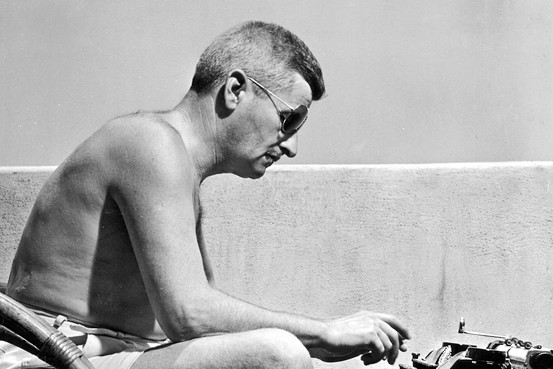
For many years the Estate of James Joyce was infamous for its use of copyright law to restrict what many people considered fair uses of Joyce’s works. Now that most of Joyce’s works are in the public domain, it seems that the owner of William Faulkner’s copyrights, Faulkner Literary Rights LLC (“Faulkner”, is stepping up to take its place. But in the “Midnight in Paris” case you’ve gotta wonder: what the heck was Faulkner thinking?
Even many people who have never read a word of William Faulkner will recognize these famous lines: “the past is never dead. It’s not even past.” These words are spoken by the fictional County attorney Gavin Stevens in Faulkner’s novel Requiem of a Nun.
The production of a Hollywood movie oftenrequires the producer to obtain many copyright permissions. However, when Woody Alan’s Midnight in Paris was released in 2011, one of the characters paraphrased these lines from Faulkner. When the protagonist, Gil (played by Owen Wilson) accuses his wife, Inez (played by Rachel McAdams) of having an affair she asks him where he got that idea. He responds that he got the idea from Hemingway, Fitzgerald, Gertrude Stein and Salvador Dali, a response that Inez ridicules because they are all dead. In response, Gil quotes Faulkner: “The past is not dead. Actually, it’s not even past. You know who said that? Faulkner, and he was right. And I met him too. I ran into him at a dinner party.”
The producers of Midnight in Paris may have tried and been denied the right to use these words, or they may not have tried at all, concluding that the use was too minimal, and too transformative, to require a license. Regardless, after the movie appeared Faulkner sued Sony Pictures Classics Inc. in federal court in Mississippi alleging, among other things, copyright infringement. On July 18, 2013 the case was dismissed based on the fair use doctrine. Faulkner Literary Rights LLC v. Sony Pictures Classics Inc.
The federal judge who drew this case, Judge Michael P. Mills,* did his level best to address the Faulkner estate’s case with a straight face, and wrote an opinion that would do any college English major proud. However, he gave himself away when he commented, “how Hollywood’s flattering and artful use of literary allusion is a point of litigation, not celebration is beyond this court’s comprehension.”
*Judge Mills is a graduate of the University of Mississippi and has lived in Mississippi for more than 30 years, although there’s no reason to think he’s ever visited Yoknapatawpha County.
Predictably to everyone except Faulkner, Judge Mills found the movie’s use of the quote highly transformative, a key factor in determining whether a copy qualifies as fair use. The heart of the court’s decision is captured in this quote:
The speaker, time, place, and purpose of the quote in these two works are diametrically dissimilar. Here, a weighty and somber admonition in a serious piece of literature set in the Deep South has been lifted to present day Paris, where a disgruntled fiancé, Gil, uses the phrase to bolster his cited precedent (that of Hemingway and Fitzgerald) in a comedic domestic argument with Inez. Moreover, the assertion that the past is not dead also bears literal meaning in Gil’s life, in which he transports to the 1920’s during the year 2011. It should go without saying that this use is highly distinguishable from an attorney imploring someone to accept responsibility for her past, a past which, to some extent, inculpates her for the death of her child. Characters in both works use the quote for antithetical purposes of persuasion. On one hand is a serious attempt to save someone from the death penalty, and on the other is a fiancé trying to get a leg up in a fleeting domestic dispute. The use of these nine words in Midnight undoubtedly adds something new, with a further purpose or different character, altering the first with new expression, meaning, or message.
In addition to its claim of copyright infringement, Faulkner alleged violation of the Lanham Act. Faulkner claimed that the film would “deceive or confuse viewers as to a perceived affiliation, connection or association between William Faulkner and his works on the one hand, and Sony, on the other hand.” The proposition that the use of this Faulkner quote in Woody Alan’s movie would confuse viewers as to a perceived affiliation between Faulkner and Sony is, if not an insult to the intelligence of Americans, certainly an insult to the New Yorker(ish) fans of Woody Alan. The judge denied this claim out of hand.
What was Faulkner thinking when it filed this case?
_________________________
Bonus content 1 – Letter in which William Faulkner quite his job with the U.S. Postal Service:
October, 1924
As long as I live under the capitalistic system, I expect to have my life influenced by the demands of moneyed people. But I will be damned if I propose to be at the beck and call of every itinerant scoundrel who has two cents to invest in a postage stamp.
This, sir, is my resignation.
(Signed by Faulkner)
Bonus content 2 – A couple of days after this post was published the Wall Street Journal published an extensive article on Faulkner’s attempts to capitalize on William Faulkner’s estate, including an unsuccessful attempt to sell Faulkner’s 1949 Nobel Prize medallion. The article discusses similar efforts by the estates of Hemingway, Fitzgerald, Joyce and Nabokov.
I haven’t written a post that falls in the “what were they thinking” category for quite a while, but you don’t see this very often.
In Angiodynamics v. Biolitec AG Massachusetts federal district court judge Michael Ponsor (pictured left) entered a preliminary injunction forbidding the defendant from entering into a merger with its German subsidiary corporation, so as not to put the company’s assets outside the reach of the plaintiff. In addition to corporate defendants, the corporate defendant’s CEO, Wolfgang Neuberger, was named as an individual defendant.
The injunction order was appealed, and the First Circuit upheld the injunction. The defendant then went forward with the merger in direct violation of the court’s order.
When Judge Ponsor received the plaintiff’s motion for contempt he ordered that Mr. Neuberger appear at the hearing on that motion. Neuberger declined to attend on the grounds that he was “afraid that the Court may . . . incarcerate him.”
Based on my experience with Judge Ponsor, he is a relatively easy-going, patient judge (as federal judges go). Not in this case. In response to the plaintiff’s motion for contempt he wrote that the defendant violated the injunction “in every way it could be violated: text, substance, spirit, body, and soul.” Judge Ponsor has been on the federal bench for 25 years. He wrote that the defendants’ conduct “constitutes the most flagrantly offensive violation of a court order that this court has personally encountered.”
Judge Ponsor entered an order that, in its severity, is unprecedented in my experience:
First, he ordered that a warrant be issued for the arrest of Wolfgang Neuberger. He stated that “the court asks the marshals to do everything possible to ensure that the warrant is effectuated internationally and Neuberger is brought to stand before this court.” This warrant is not to be taken lightly. In 2012 the U.S. Marshall Service arrested 36,200 federal fugitives. The Marshall Service “sees to it that there is no safe haven for criminals who flee the territorial boundaries of the United States.” Germany will not extradite a German citizen to the U.S. for criminal prosecution, but Neuberger is subject to arrest in many other countries that do have extradition treaties with the U.S.
Second, he ordered that the defendants be fined as follows: $1 million on May 10; $2 million on June 1; $4 million on July 1; $8 million on August 1 and on the first of each month thereafter. These fines will continue until the merger is reversed and the status quo ante restored. Likewise, only then will Mr. Neuberger be released from prison (assuming he is apprehended).
Third, Judge Ponsor has requested that the U.S. Attorney’s Office prosecute Neuberger for criminal contempt.
In the meantime, the fines ordered by Judge Ponsor will continue to accumulate unless and until the merger is reversed. Whether the plaintiff will be able to enforce those fines in Germany is an open (and doubtlessly difficult) question. However, a judgment against Biolitec (whether to enforce the fines or, perhaps, a default judgment) would be a serious obstacle to the company ever selling products (lasers and laser delivery systems) in the U.S. in the future, since the plaintiff could attach or trustee process any monies owed to Biolitec by an entity in the U.S.
Bottom line, Biolitec should reverse that merger post haste. What were they thinking?
The ConnectU/Facebook legal saga is truly astounding. Imagine a mature Oak tree. Now give the it properties of Kudzu vine (the “vine that ate the South”). Each branch of this tree is another lawsuit involving ConnectU, Facebook, the principals, and their lawyers.
Now, a new branch has burst forth. Wayne Chang has sued ConnectU and its lawyers in Superior Court Business Litigation Session in Suffolk County, Boston, claiming that Chang is entitled to as much as 50% of the value of the ConnectU/Facebook settlement (so called, since ConnectU has challenged the finality of the settlement).
How many residential driveways are there in the USA? I have no idea, but I would estimate tens of millions. So it figures that someone whose driveway was videotaped by Google and put on the Internet for all to view (!?) on Google Street View would sue Google for invasion of privacy and trespass.
My theory: these people actually crave attention for their property, and what better way to get it, than this? But then, I am married to a psychologist.
Oh, and of course, there’s this. No need to get paranoid, now …..
It’s not often that the U.S. Department of Justice prosecutes a sitting U.S. Senator, obtains a conviction at trial, and then concludes it has no choice but to voluntarily dismiss the charges and let the former defendant walk free, totally vindicated. But that’s what happened in United States v. Ted Stevens, the government’s case against the longest-serving Republican in the Senate’s history. If this has ever happened before in the United States, I’m unaware of it.
To quote from today’s New York Times:
Judge Emmet G. Sullivan dismissed the charges against Mr. Stevens, which was expected given the way the case has disintegrated since the conviction in October. But the judge went well beyond that step, declaring that what the prosecutors did was the worst “mishandling or misconduct that I’ve seen in my 25 years.”
Judge Sullivan spoke disdainfully of the prosecutors’ repeated assertions that any mistakes during the trial were inadvertent and made in good faith. He said he had witnessed “shocking and serious” violations of the principle that prosecutors are obligated to turn over all relevant material to the defense.
The judge appointed the attorney Henry Schuelke as special prosecutor to investigate possible criminal contempt charges against the prosecution team.
How could this happen? The article suggests the lawyers may have been grossly overworked, rushed to trial by an aggressive defense (damn good move by the defense, if true), or simply outlawyered by Williams & Connolly, a notoriously tough white collar criminal defense firm and the D.C. “go to” firm for cases like this. Or, of course, the attorneys could have simply gotten carried away and decided to play outside the rules of criminal procedure and legal ethics. In the heat of a high-stakes criminal case, anything can happen.
But with a special prosecutor appointed by a federal judge to investigate the Stevens prosecutors, we may never know exactly how this all unfolded. There will be theories, of course, perhaps even a book or two – John Grisham may be turning this over in his mind right now, trying to figure out if there’s a novel there somewhere (sure there is John!).
The lawyers under investigation will “lawyer up” and perhaps take the Fifth (which is sure to cost them their jobs). Some may cut deals and testify against others, or some may be granted immunity; how could they afford the defense costs if they don’t? In other words, the special prosecutor will use the same tools against them that they were used to using against their targets.
In addition to the risk of criminal contempt, there are serious ethical issues that may have to be investigated by the D.C. and Alaska Bars (some of the lawyers were based in Alaska).
In a very real sense you have to feel sorry for these prosecutors – no one goes to law school and becomes a career prosecutor expecting to get caught up in something like this. And more than almost anyone else, they had to have known the risks they were taking, and the consequences if they were discovered. They took on a very big fish, and that fish was backed by an enormously powerful and resourceful law firm that spared nothing in the defense of its client. And so, the hunters become the hunted.
“How does the court have confidence that the public integrity section has public integrity?” Judge Emmett Sullivan, during the trial of former Senator Ted Stevens
Prosecutor: I already got no proof how the victim got hold of that heroin. Now you’re saying I can’t put Hodgins on the stand? Why? FBI Agent: You don’t wanna know the answer to that. Forensic Investigator: Why doesn’t she wanna know? Prosecutor: As the prosecutor in this case, I’m obliged to share everything I know with the defense. Forensic Investigator: [starts to explain…] Prosecutor: Whoa! Goodnight!
From TV Show “Bones”
____________________________________________
Prosecutors have a legal duty to provide criminal defendants with exculpatory evidence. Every criminal prosecutor knows this – it’s probably Rule No.1 for prosecutors: “YOU MUST GIVE DEFENDANT EXCULPATORY EVIDENCE.” This has been a constitutional right since the 1963 Supreme Court decision in Brady v. Maryland.
Rules 2 and 3 are, don’t forget Rule No. 1.
Today’s decision by the Obama Justice Department to dismiss criminal charges against former Senator Ted Stevens means that prosecutors at the highest levels of the DOJ forgot this rule (or disregarded it). This is an enormous embarrassment for DOJ, and a probably a career killer for the attorneys involved, who are likely to be sacked, at the very least. (Keep in mind that former U.S. Attorney General Roberto Gonzales has been unable to find a private law firm job 18 months after his resignation, apparently due to the stigma associated with the assistant AG firings and other controversies associated with his tenure. It’s a tight job market for lawyers these days, but not that tight.)
Vindication is probably small consolation for Senator Stevens, whose loss in the last senatorial election was almost certainly due to his conviction just before the election. At age 85 he may recover his reputation, but he’s not likely to recover his Senate seat.
Judge: Miss West, are you trying to show contempt for this court?’ Mae West: On the contrary, your Honor, I was doin’ my best to conceal it.’ (During a trial in which she was accused of indecency on stage)
“The thing to fear is not the law, but the judge” Russian Proverb
“One bad apple ruins the barrel”
—————–
History is replete with judges who are open to bribery, who serve special interests or who are otherwise corrupt. We often read of judges who are sanctioned or prosecuted for misconduct. When a person dons a judge’s robe her character and values don’t change.
Despite the long history of judicial misconduct, I still was surprised to read about this kickback scheme in the February 13, 2009 New York Times. Quoting excerpts from the article:
[O]n Thursday . . . judge Mark A. Ciavarella Jr., and a colleague, [judge] Michael T. Conahan, appeared in federal court in Scranton, Pa., to plead guilty to wire fraud and income tax fraud for taking more than $2.6 million in kickbacks to send teenagers to two privately run youth detention centers run by PA Child Care and a sister company, Western PA Child Care. . . .
While prosecutors say that Judge Conahan, 56, secured contracts for the two centers to house juvenile offenders, Judge Ciavarella, 58, was the one who carried out the sentencing to keep the centers filled.
Senior Judge Arthur E. Grim . . . was appointed by the State Supreme Court this week to determine what should be done with the estimated 5,000 juveniles who have been sentenced by Judge Ciavarella since the scheme started in 2003. Many of them were first-time offenders and some remain in detention. . . .
If the court agrees to the plea agreement, both judges will serve 87 months in federal prison and resign from the bench and bar. They are expected to be sentenced in the next several months. . . .
Prosecutors say the judges tried to conceal the kickbacks as payments to a company they control in Florida.
I’m surprised by how often clients ask me whether judges in Massachusetts are on the up-and-up. I answer that they are, and with rare exceptions I believe that to be true. These clients are businesspeople involved in civil cases, not alleged criminals. Yet, they approach the civil courts with a degree of suspicion and mistrust that sometimes is alarming. It’s not unusual for a client to imply that a judge might be “bought off” by someone on the other side of the case, of just ask openly if this happens.
Directly or indirectly, millions of people will hear about these two Pennsylvania judges. Their crimes will become part of permanent the fabric of the U.S. legal system. The message is far worse than simply “some judges can be bought.” The message is that on their own initiative, some judges will use their position of power to enrich themselves, even if it causes enormous and lasting harm to the people (in this case minors), who appear before them. Judges everywhere in the United States are diminished by this scandal.
The answer to the question posed in the title is: No. No, no, no, no, no.
Only a lawyer with really bad judgment would file a suit alleging breach of contract, fraud, and related claims. And, after losing in federal district court, appeal to the Sixth Circuit.
If you really want to know the “legal” grounds for dismissal in this case, the decision is Doe v. SexSearch.com,*
But, ’nuff said on this one. If you feel compelled to use a site like SexSearch.com (not that there’s anythingwrong with that), it might be prudent to ask your partner for an I.D. before, …. well, you know. Hmmm …. on second thought, maybe its best to just stay home and watch the telly.
* The online contract between SexSearch and its members states: SexSearch “cannot guarantee, and assume[s] no responsibility for verifying, the accuracy of the information provided by other users of the Service.”
Massachusetts Superior Court Judge Ernest Murphy won a $2 million libel verdict against the Boston Herald after the Herald incorrectly reported that he had said that a 14 year old female rape victim should “get over it.”
Here are quotes from the letters, taken from the SJC reprimand. The letters proposed a meeting between Judge Murphy and Patrick Purcell, were hand-written on Superior Court stationery, and proposed a luncheon meeting between Murphy, Purcell and (presumably) the Herald’s insurer. The letter went on to tell Purcell –
to “have one person … at the meeting…. Under NO circumstances should you involve [counsel in the lawsuit] in this meeting…. You will bring to that meeting a cashier’s check, payable to me, in the sum of $3,260,000. No check, no meeting.” In the postscript, the judge writes that it would be “a mistake … to show this letter to anyone other than the gentleman whose authorized signature will be affixed to the check in question. In fact, a BIG mistake.”
The letter of March 18, 2005, states, “[Y]ou have a ZERO chance of reversing my jury verdict on appeal. Anyone who is counselling you to the contrary … is WRONG. Not 5% … ZERO. AND … I will NEVER, that is as in NEVER, shave a dime from what you owe me….” (Emphasis in original.)
OF course, Purcell did show these letters to his lawyer, the meeting never took place, the Herald published the letters in the paper, and the Herald filed a complaint with the Commission on Judicial Conduct, leading eventually to the SJC reprimand.
All of which leads to a few questions:
Really Judge, did you really think that Patrick wouldn’t show these letters to his lawyer? Really!
Did you think it might send the wrong message for a judge to use official stationery for personal business? Not once, but twice? Did you think that this might be perceived as a misuse of the power of your office? Really!!
Really Judge Murphy, did you think that writing a letter of this nature would reflect positively on the integrity and prestige of the Massachusetts judiciary? Did it occur to you that these letters might come across as being, well, sorta creepy?
Did it occur to you that it might be perceived as a misuse of the enormous power wielded by a judge to suggest that the party you had sued could not prevail on appeal? Could that have suggested that you had some influence with the appeals process, or might be able to affect the outcome in some manner? Really!!
Really Judge Murphy, you claimed not to know that the Code of Judicial Conduct contained an express prohibition against use of judicial stationery for personal purposes, but as a judge haven’t you heard the expression, “ignorance of the law is no excuse”? Really!
You suggested that Purcell meet you at the Union Club of Boston, one of our fair city’s oldest and “woodiest” men’s clubs, which was formed in 1963 and didn’t allow women members until 1980? Didn’t you think this might be viewed as a bit of a cliche? Why not the McDonalds on Washington Street? Really!
Oh, and really Judge Murphy, didn’t it occur to you that the Boston Herald might publish these letters for all the world to see? After all, the Herald is a newspaper with a reputation for being very aggressive, so didn’t you think that they would eat this up and use this to publically embarrass you? Really!?!
I’ve heard this quote attributed to Alan Abelson of Barron’s, but who knows, it may be from Kansas. Maybe Abelson used to listen to Kansas.
In any event, it came to mind when I heard that the Maestro, a Master of the Universe if there ever was one, spoke thus before Congress last week:
REP. WAXMAN: You found a flaw in the reality —
MR. GREENSPAN: Flaw in the model that I perceived as the critical functioning structure that defines how the world works, so to speak.
REP. WAXMAN: In other words, you found that your view of the world, your ideology was not right. It was not working.
MR. GREENSPAN: Precisely. That’s precisely the reason I was shocked, because I had been going for 40 years or more with very considerable evidence that it was working exceptionally well.
I’m gonna tell you a story
I’m gonna tell you about my town
I’m gonna tell you a big bad story, baby
Aww, it’s all about my town
I’ve lived in Boston all my life, going on 60 years in the not too distant future, and you’d think that I’d be used to this stuff by now, but really, I’m not. I keep thinking that Boston has joined the 21st Century (or at least my fantasy of what the 21st Century should be). Sure, I like to read books by George Higgins
Here is Wilkerson below, allegedly stuffing a $1,000 cash payoff into her bra during a meeting with an informant at No. 9 Park restaurant on June 18, 2007. No, I didn’t take this photo. I can’t afford to eat at No. 9 Park which, for out-of-towners, is a haute cuisine restaurant right near the State House, not a doorway on some poorly lit side street. This photo was part of the FBI affidavit.
The U.S. Attorney’s office has told the federal court that there are many photos, videos and audio recordings that make the government’s case solid. (Haven’t those guys ever heard of entrapment?)
Well, what can you say – the world turns, sure, but Boston keeps its charm. Love that dirty water …..
This site is hosted by Gesmer Updegrove LLP, a technology law firm based in Boston, Massachusetts. You can find a summary of our services here. To learn how GU can help you, contact: Lee Gesmer
 violation of the Lanham Act. Faulkner claimed that the film would “deceive or confuse viewers as to a perceived affiliation, connection or association between William Faulkner and his works on the one hand, and Sony, on the other hand.” The proposition that the use of this Faulkner quote in Woody Alan’s movie would confuse viewers as to a perceived affiliation between Faulkner and Sony is, if not an insult to the intelligence of Americans, certainly an insult to the New Yorker(ish) fans of Woody Alan. The judge denied this claim out of hand.